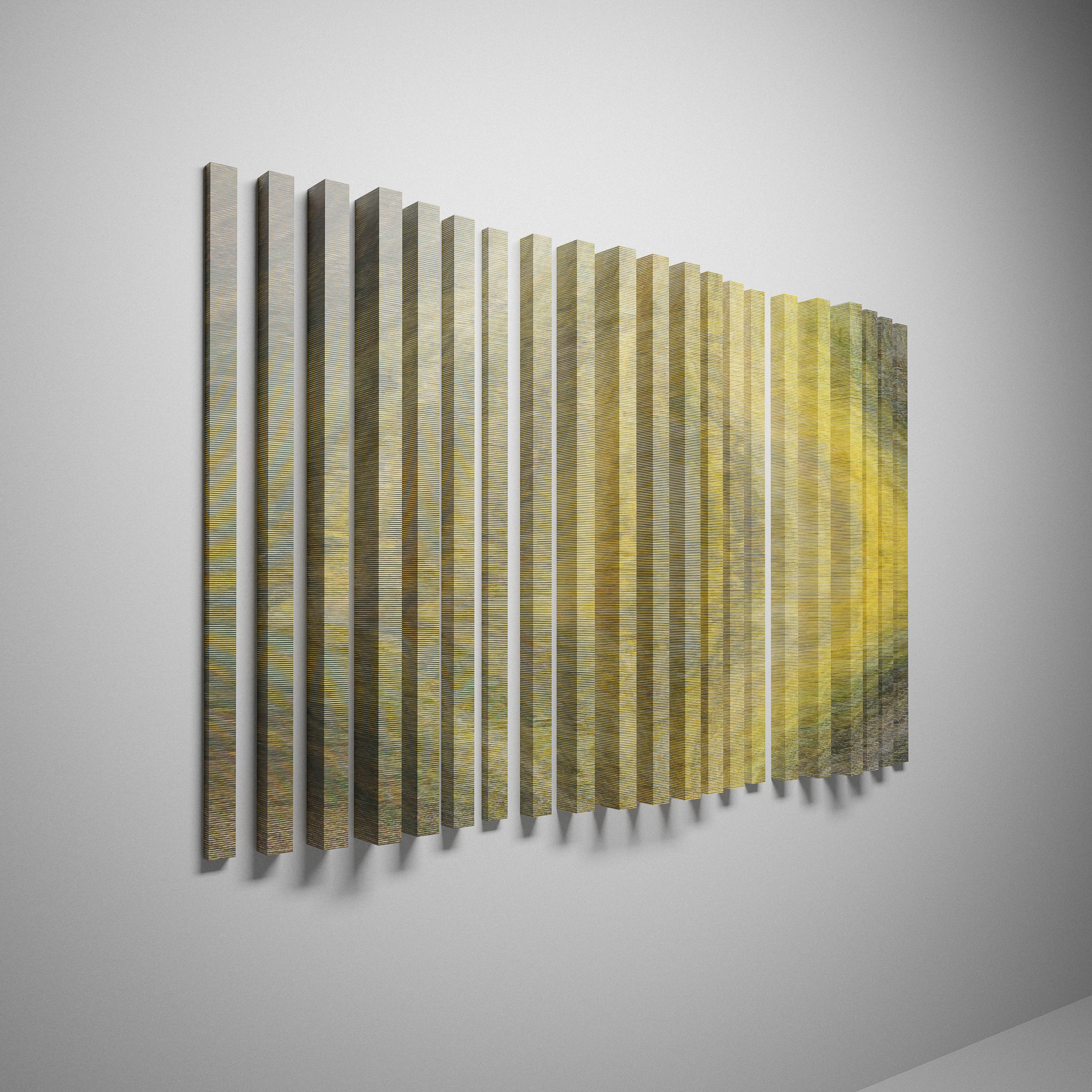
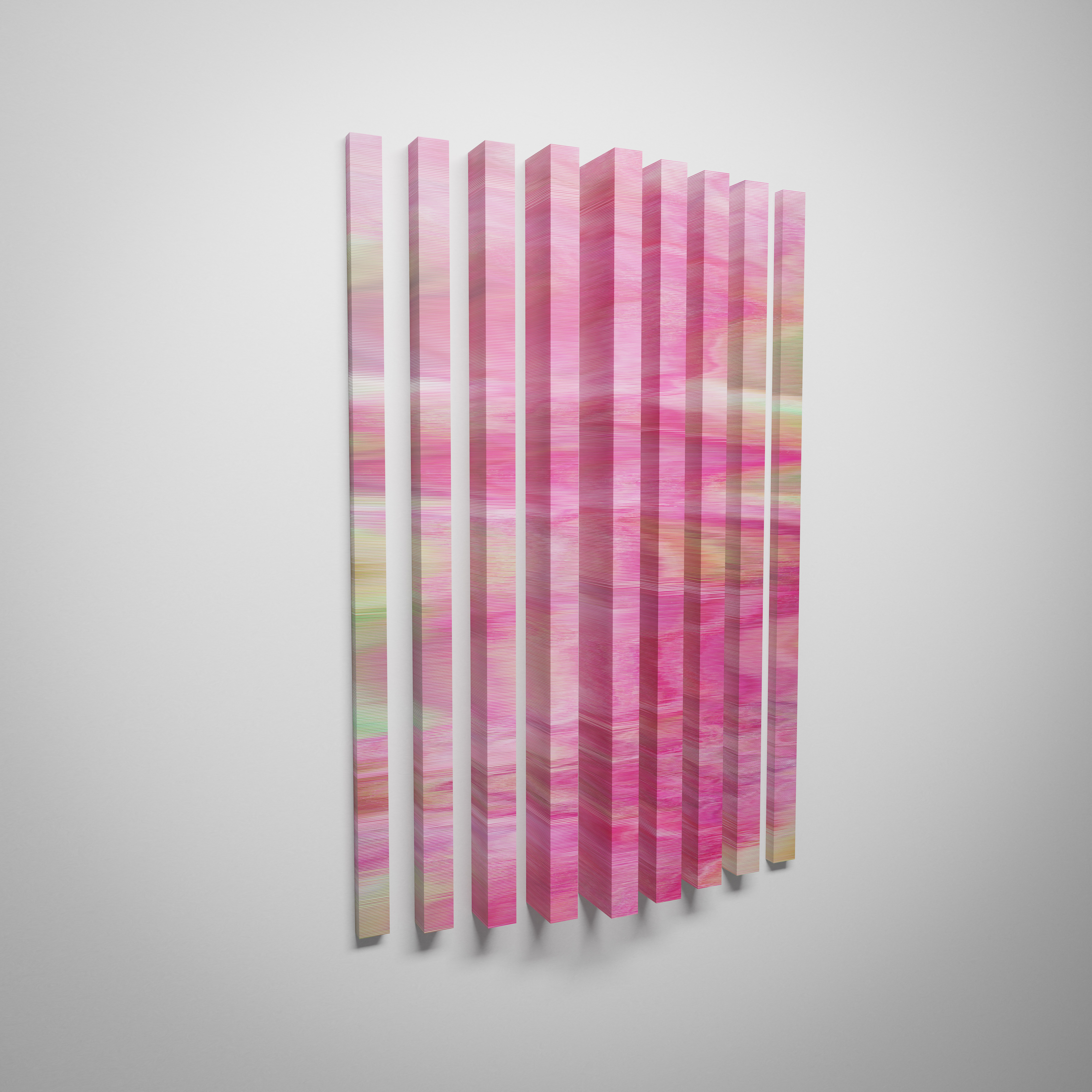
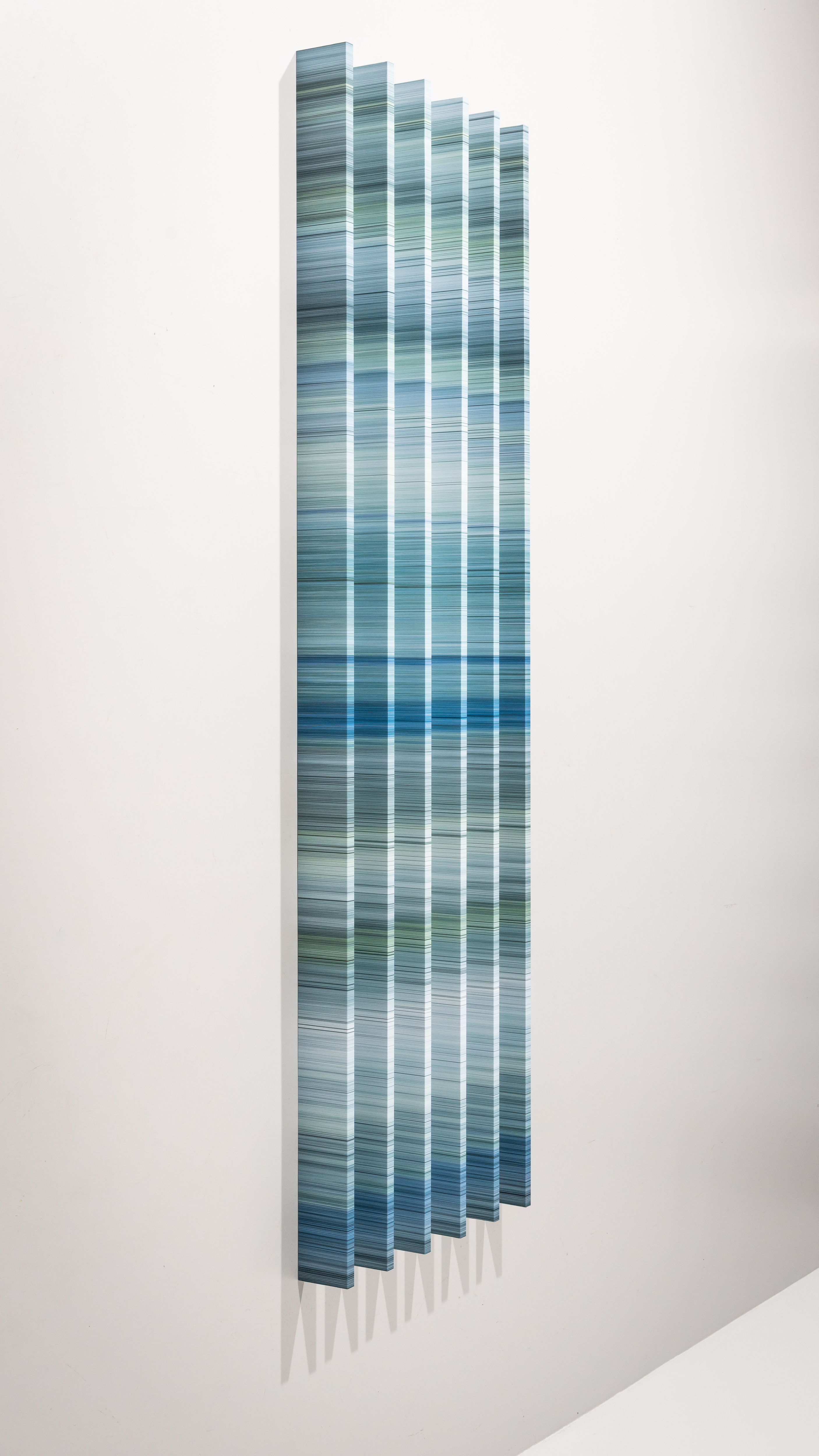
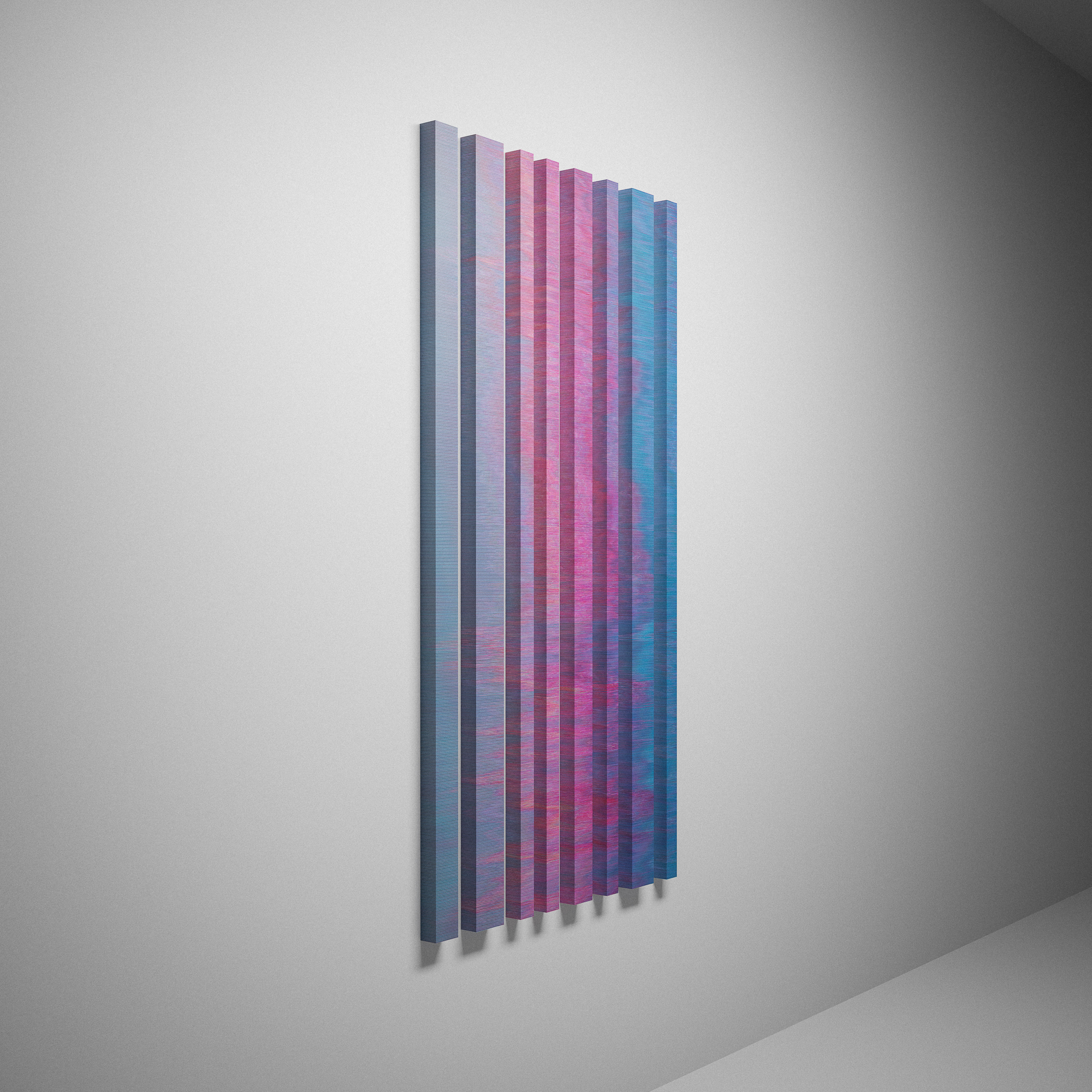
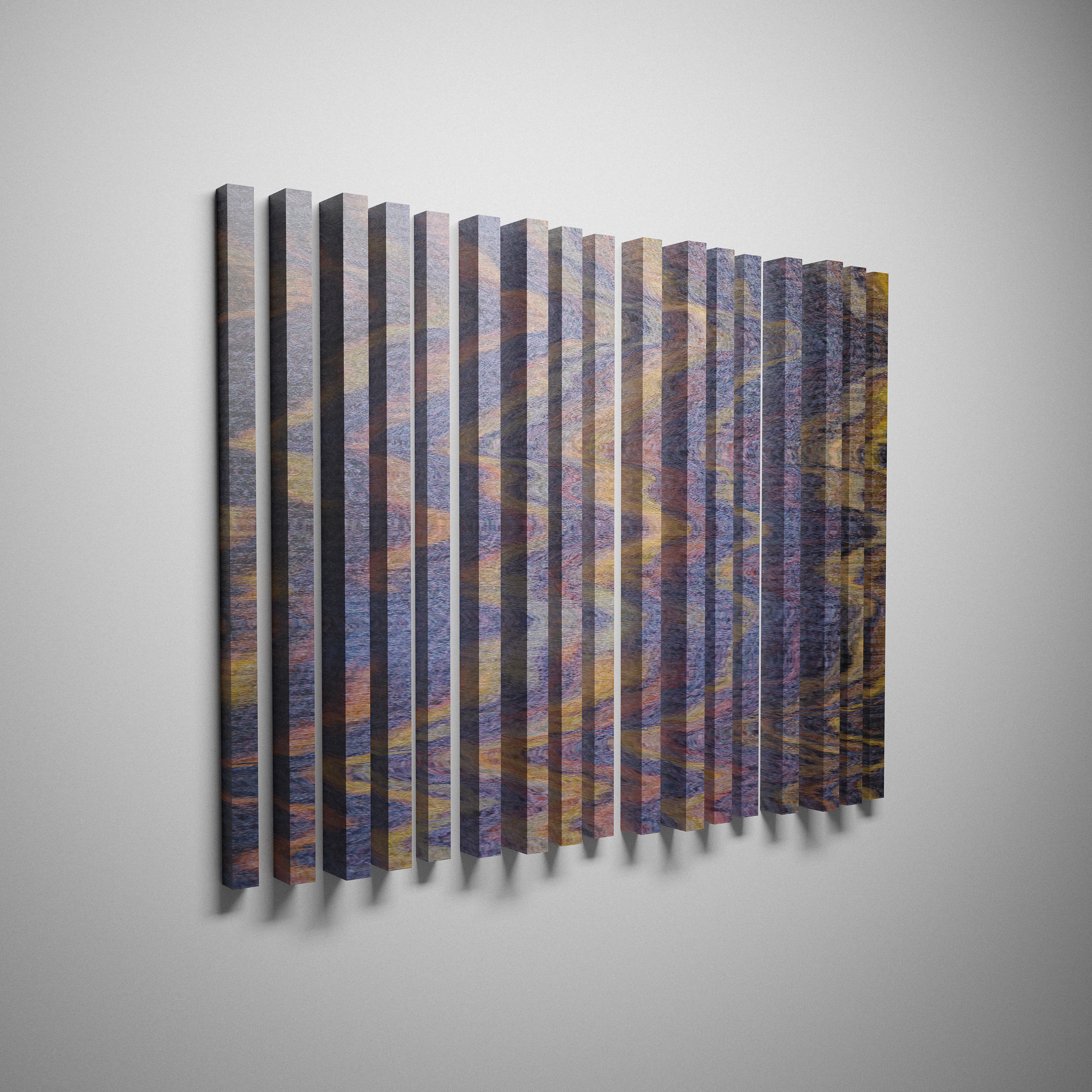
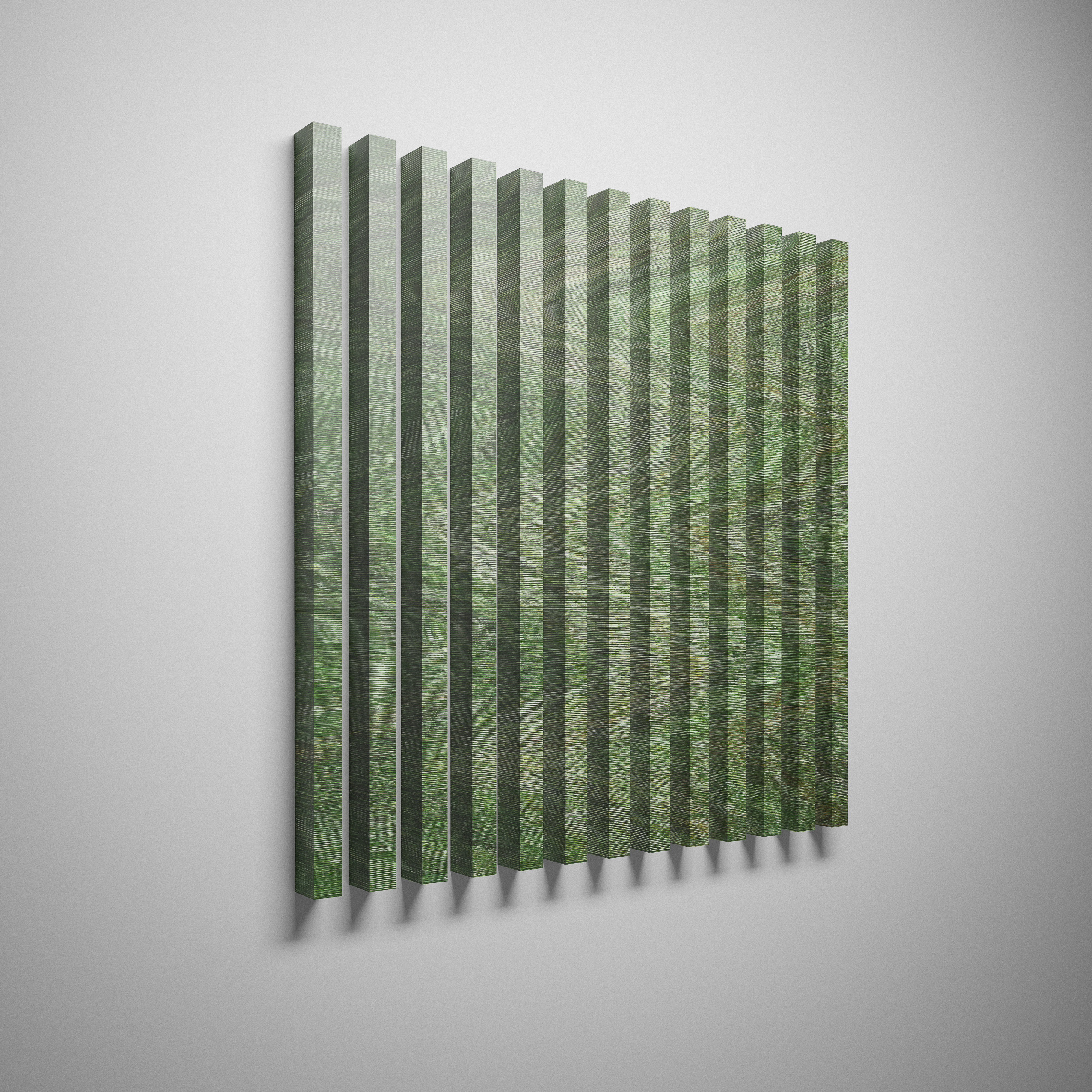
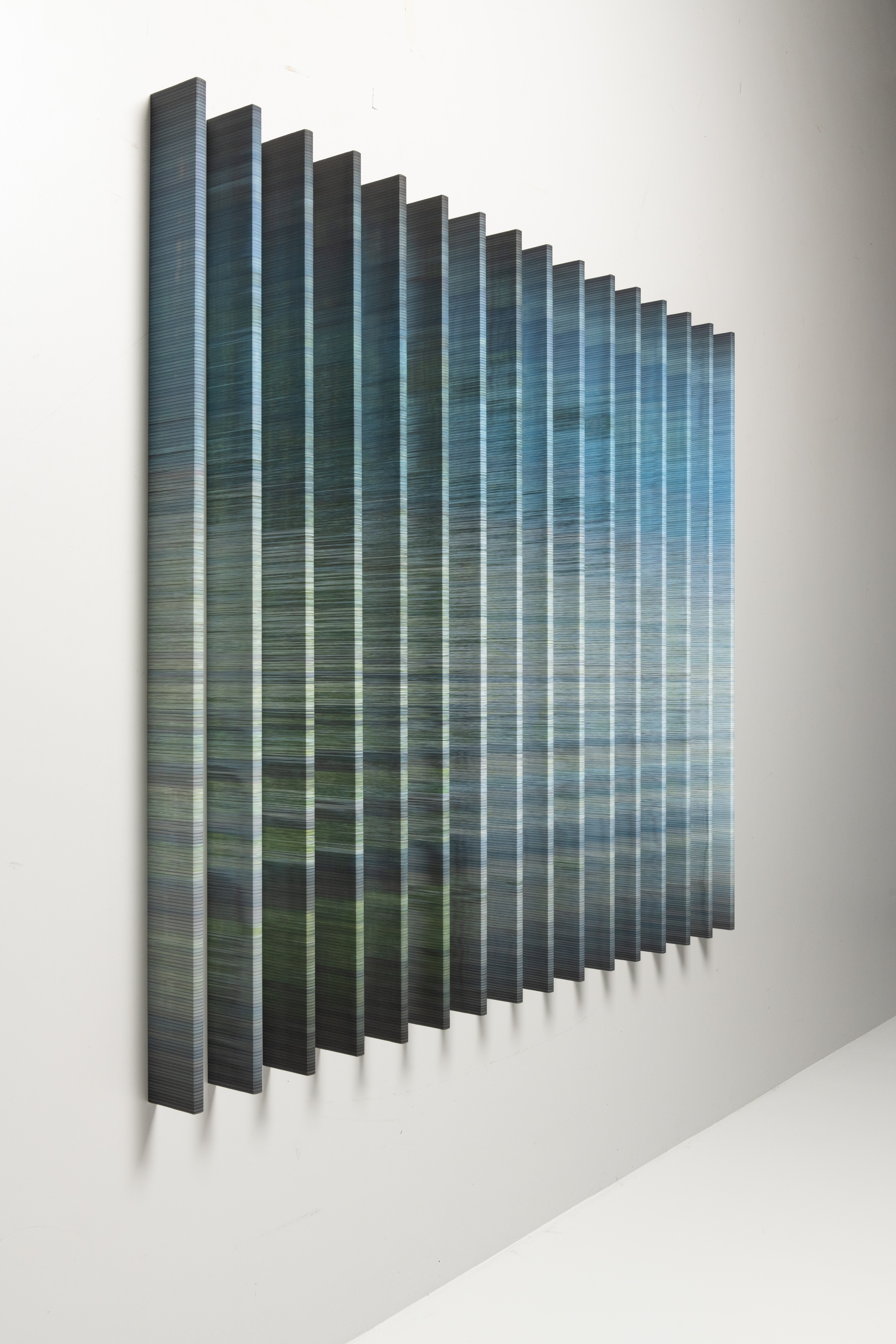
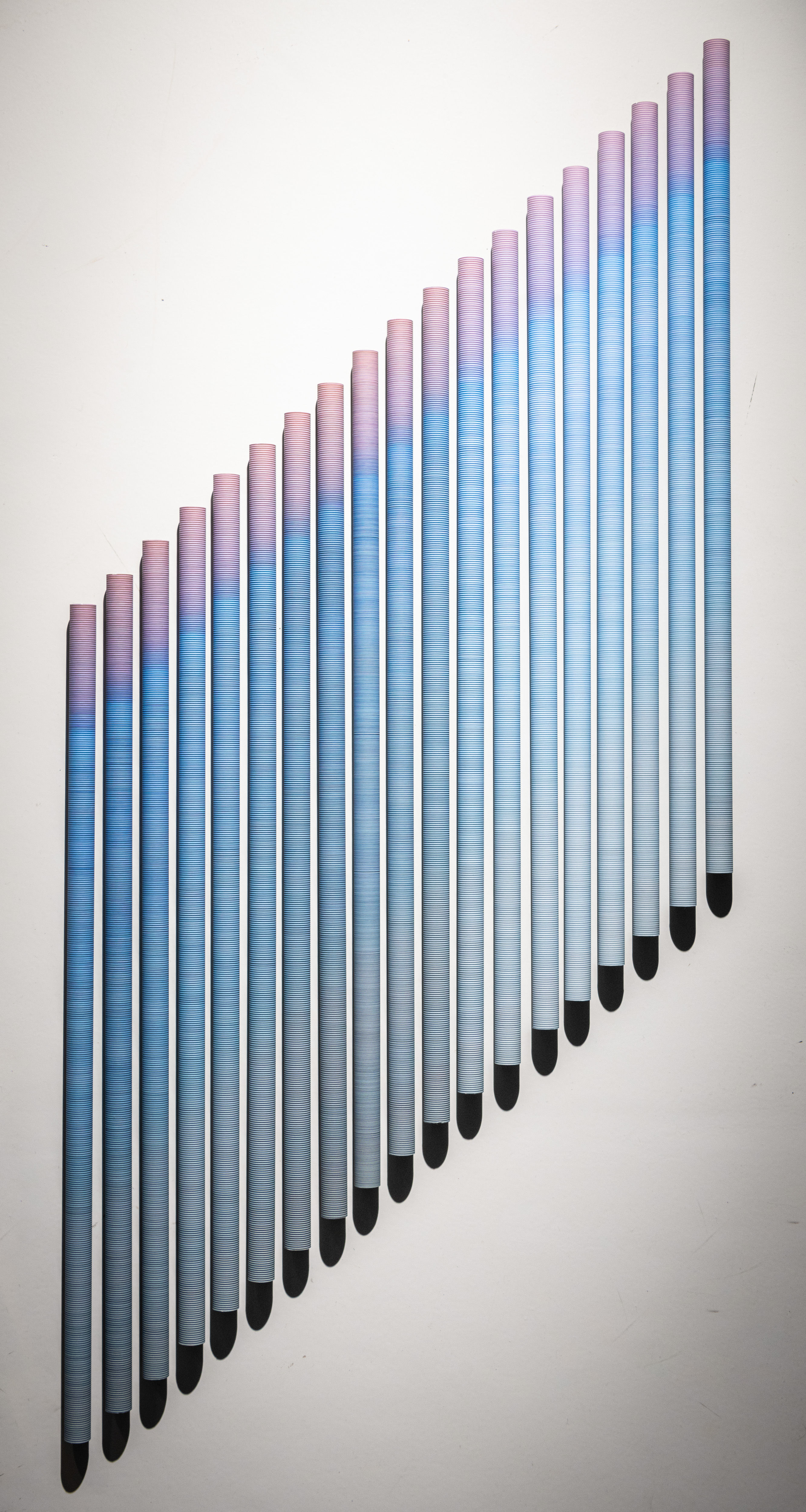
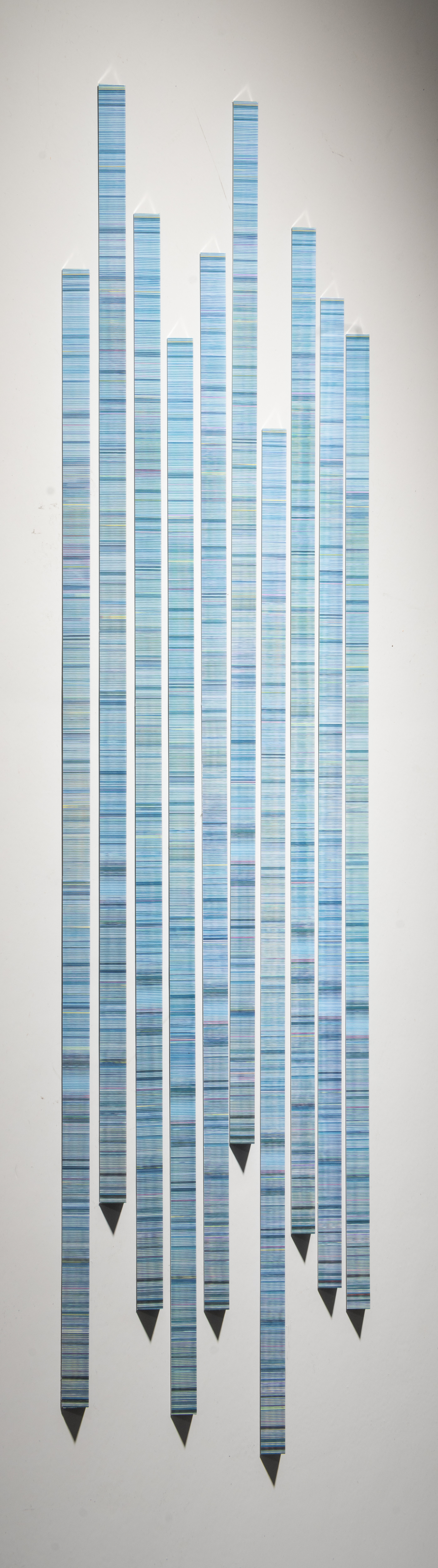
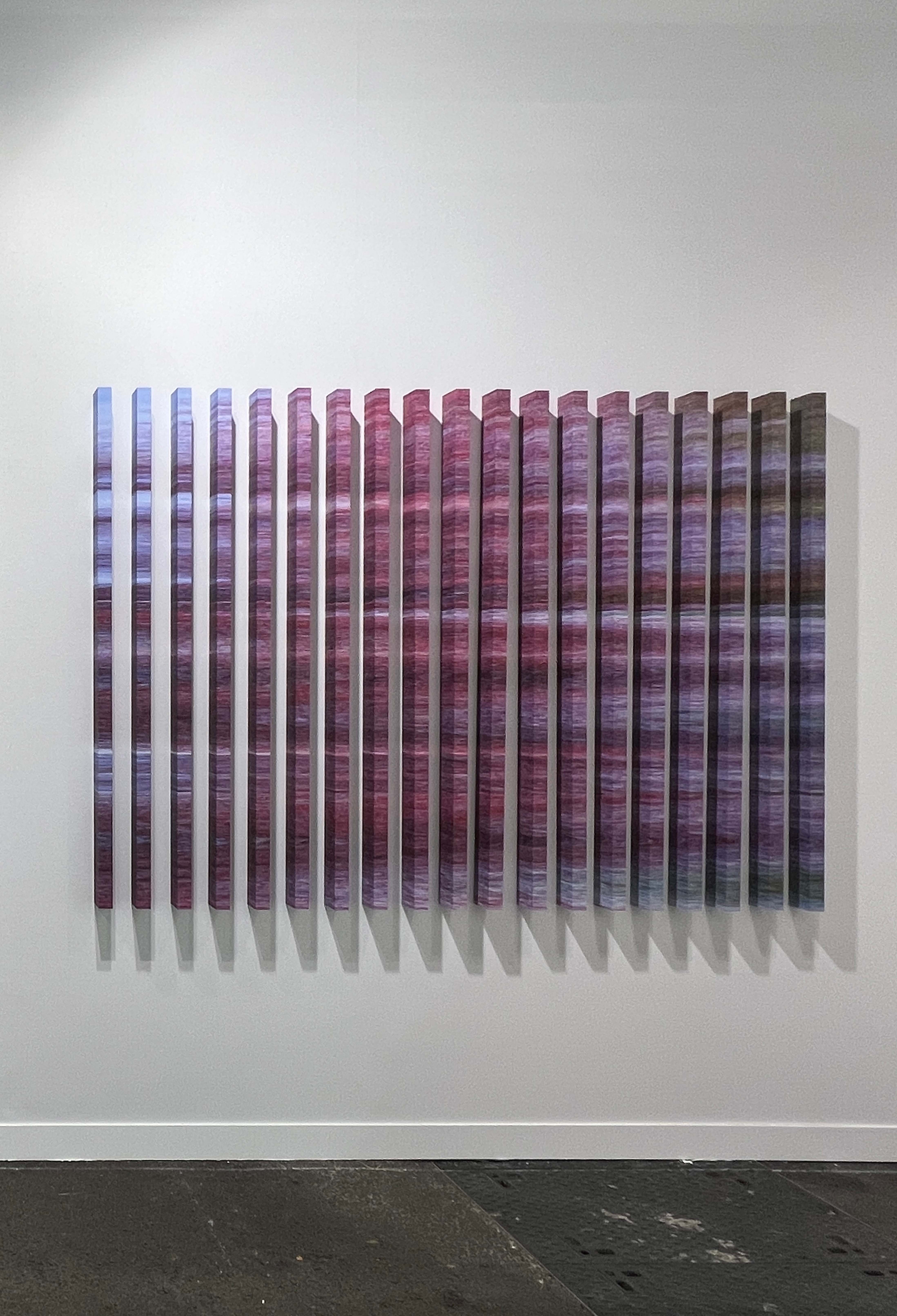
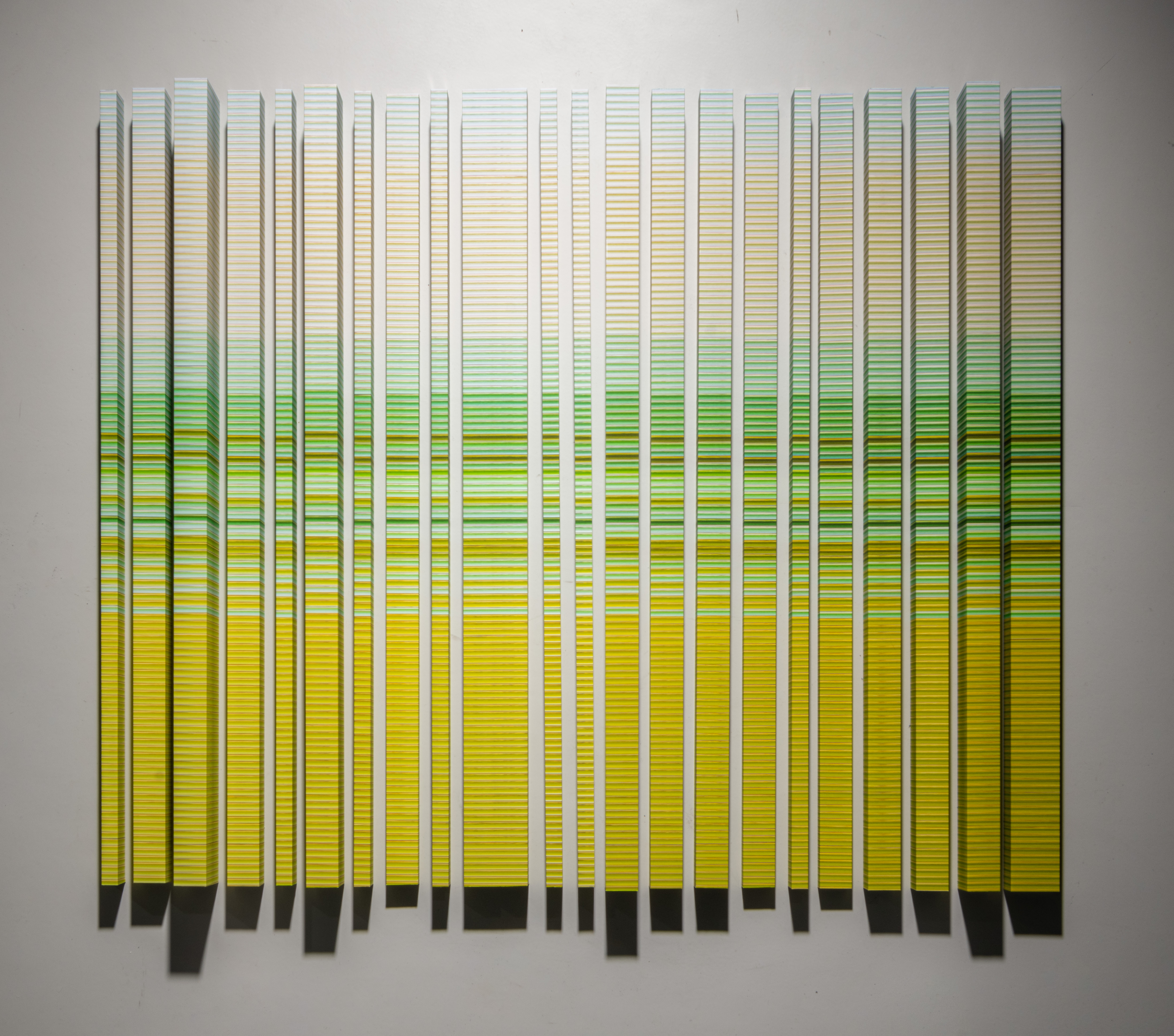
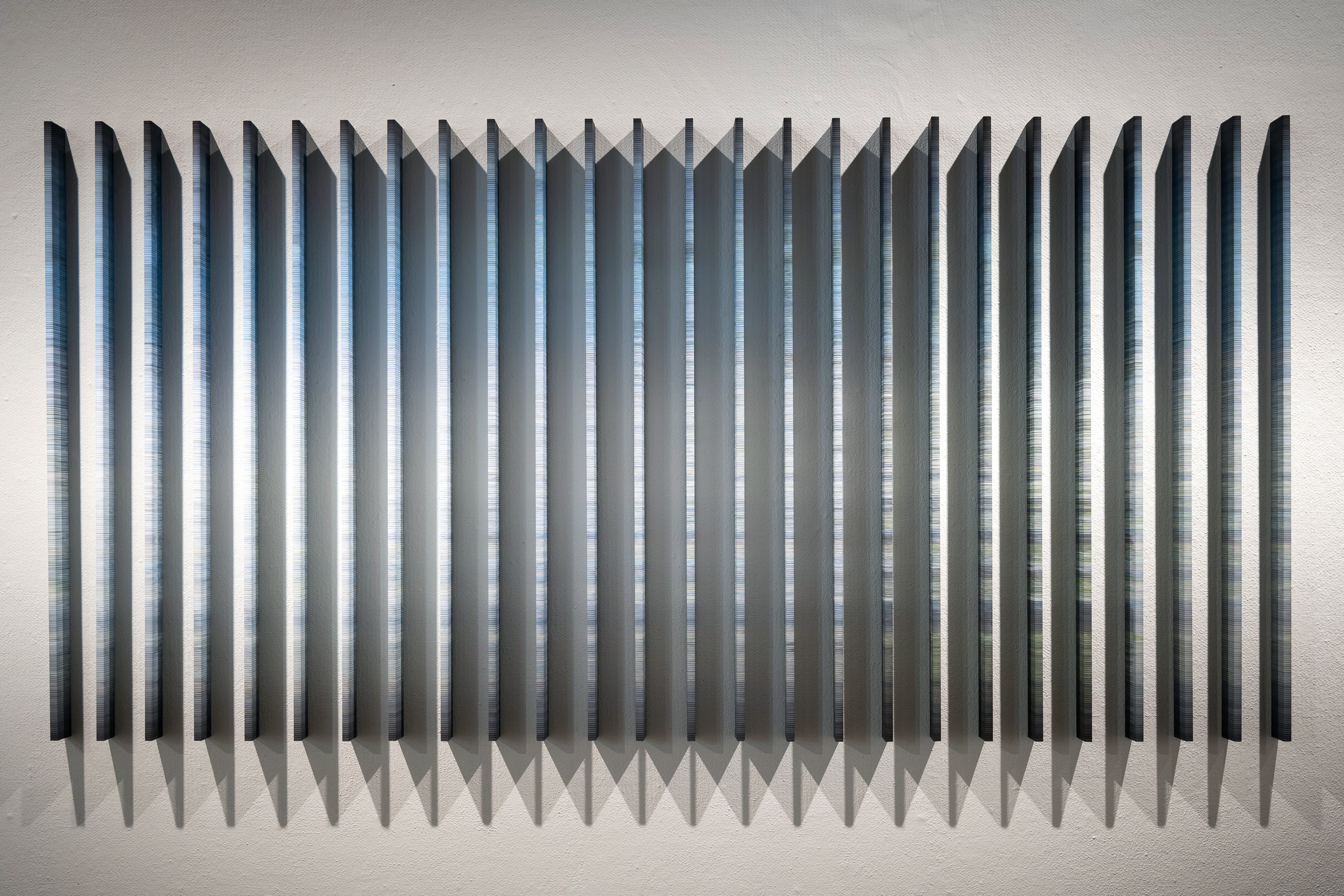
Jussi Nahkuri uses a computer program he developed, each image is compressed into a thin, single line, and these lines are merged into layered compositions. The resulting works reflect the colors of the selected place and, together with shifting light and changing conditions over a defined period of time, translate duration into a visual form. The photographs are then laminated onto aluminum profiles, giving them a three-dimensional, sculptural quality. As viewers move around the works, shifting perspectives reveal different aspects of the image and highlight the continuous transformation of a place shaped by changing light and human presence. Nahkuri essentially visualizes what hindsight might look like.
Chance and intuition play an important role in Nahkuri’s process, as subtle variations between images emerge from natural changes in light and movement within the environment. By working within precise parameters, he remains open to unexpected outcomes that shape the work. Although grounded in the traditional practice of photographic observation, his use of abstraction is central to his approach. His works move beyond representation, distilling visual information into fields of color, light, and form. Recognizable elements dissolve into abstract compositions through his ability to interpret the passage of time filtered through his perception of seeing.
Ultimately, each work marks a specific moment and place when conditions align, capturing a multitude of unique instances shaped by subtle and unpredictable changes in the surrounding environment. By gathering and compressing these moments, Nahkuri’s practice suggests that reality can be understood not as something fixed, but as a continuous process of transformation.